
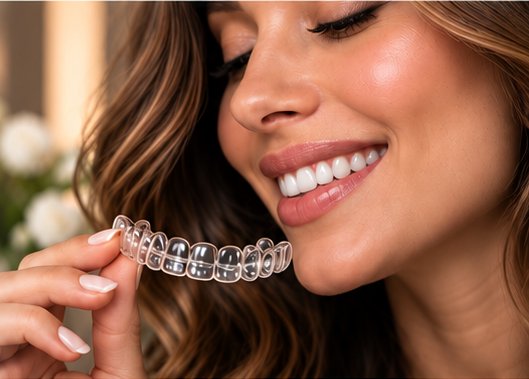
Straight teeth are easier to clean and help your bite work the way it should. Today you have two main ways to get there: clear aligners like Invisalign, or traditional braces. Both can deliver excellent results. The right choice depends on your teeth, your habits and your lifestyle.
How each one works
Invisalign uses a series of custom, clear plastic trays. You switch to a new set on a schedule, and each set moves your teeth a small step closer to the planned position. At our office, treatment starts with an iTero 3D scan, so you can preview your new smile before you begin, without messy impressions.
Braces use brackets bonded to your teeth and a wire that your orthodontist or dentist adjusts at regular visits. They stay on until treatment is finished.
Side by side
| Feature | Invisalign | Braces |
|---|---|---|
| Appearance | Nearly invisible | Visible brackets (clear options exist) |
| Removable | Yes, for meals and brushing | No |
| Food rules | Eat normally with trays out | Avoid hard, sticky and chewy foods |
| Cleaning | Brush and floss as usual | Takes extra time around brackets |
| Comfort | Smooth plastic, pressure when switching trays | Can rub cheeks; soreness after adjustments |
| Discipline needed | High: wear 20–22 hours a day | Low: always working |
| Best for | Most mild to moderate cases, adults and responsible teens | Complex movements and patients who prefer not to manage trays |
Who is a good fit for Invisalign?
Clear aligners are a great option if you want a discreet treatment, you're comfortable wearing trays most of the day, and your case involves crowding, gaps or many common bite problems. They're popular with working adults in Jersey City who don't want braces showing in meetings or photos.
When braces may be better
Some tooth movements are more predictable with brackets and wires, especially in complex cases. Braces also make sense if you know you'd forget to wear removable trays. Being honest with yourself about that is one of the most useful parts of the decision.
What about cost and time?
Treatment length and cost depend on how much your teeth need to move, so they vary from person to person. Many cases take somewhere between several months and about two years. After your exam and scan, we give you a clear plan with a timeline and your costs, including what insurance may cover.
The bottom line
There's no single "better" option, only the better option for you. Dr. Ari Dubov is an Invisalign certified provider; a consultation and a quick 3D scan will show whether aligners can reach your goals and what your result could look like.
This article is general information, not a diagnosis or treatment plan.