
A dental implant replaces the root of a missing tooth with a small titanium post, topped by a custom crown that looks and works like a natural tooth. If you're considering one, knowing each step makes the whole process feel much simpler. Here is how it works at our Jersey City office.
Step 1: Consultation and 3D planning
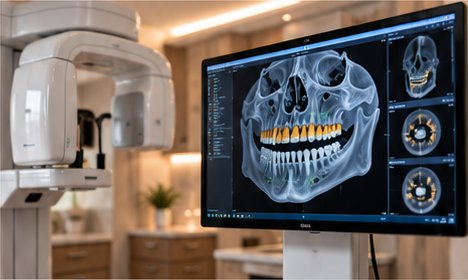
We start with a conversation about your goals, a full exam and a CBCT scan: a 3D X-ray that shows your jawbone, nerves and sinuses in detail. Using that scan, we plan the exact position, angle and depth of the implant on a computer before any treatment begins. You'll leave with a clear plan, a timeline and your costs.
Step 2: Preparing the site (only if needed)
Some patients need a little groundwork first. If a damaged tooth is still in place, it is removed. If the jawbone has thinned, which often happens after a tooth has been missing for a while, a bone graft can rebuild the area. Many people skip this step entirely; your scan tells us whether you need it.
Step 3: Guided implant placement
From your 3D plan we make a custom surgical guide, a precise template that fits over your teeth and directs the implant to the planned spot. Guided placement helps us avoid nerves and sinuses and keeps the procedure minimally invasive. The area is completely numbed, and placing a single implant is often shorter than people expect.
Step 4: Healing and integration
Over the next few months, the bone grows tightly around the implant, a process called osseointegration. This is what makes an implant so stable. Most people return to work the next day. Expect some tenderness and mild swelling for a few days; soft foods and good home care help you heal comfortably. If the implant is in a visible area, we can give you a temporary tooth in the meantime.
Step 5: Your custom crown
Once the implant has fused, we attach a connector (an abutment) and your final crown, shaped and shaded to match your natural teeth. Implants can also support a bridge or a full arch of teeth when several or all teeth are missing.
Caring for your implant
- Brush twice a day and clean around the implant daily with floss, a water flosser or small brushes.
- Keep your regular checkups and cleanings so we can monitor the gums and bone around it.
- If you grind your teeth, a night guard protects both your implant and your natural teeth.
- Not smoking makes a real difference to how well implants heal and last.
Experienced, careful hands
Both Dr. Lana Bunis and Dr. Ari Dubov completed the two-year implant training program at New York University, and every implant at Montgomery Greene Dental is planned with CBCT 3D imaging and placed with a custom guide. If you're missing a tooth, or have one that may need to come out, a consultation is the best first step.
This article is general information, not a diagnosis or treatment plan. Your timeline and options depend on your exam.